
Will AI Make Human Work Harder?
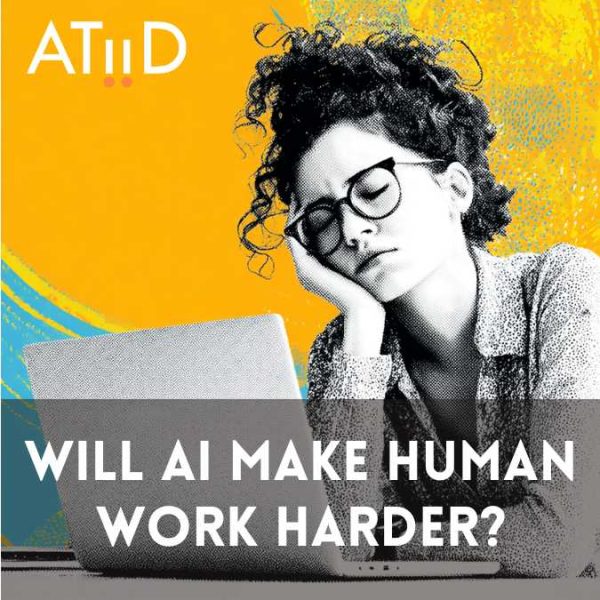
When most people think about artificial intelligence, they imagine machines making life easier with fewer emails, less data entry, no more mundane reports. And while that’s true, there’s another side to the story. Paradoxically, AI may actually make human work feel harder. Why? Because it’s going to remove the busywork we’ve relied on to avoid the harder, more mentally or emotionally taxing parts of our jobs.
The End of Hiding in Busy Work
Let’s face it: a lot of people unconsciously hide in low-effort tasks. Repetitive reporting, data gathering, note-taking, formatting spreadsheets – these feel productive, but they rarely drive real results. AI is replacing these tasks with a speed and accuracy humans can’t match. That sounds great… unless those tasks were your comfort zone.
With the “easy” work gone, what’s left? The real work, the type that requires creativity, strategy, emotional intelligence, and grit.
Sales: No More Hiding from Rejection
Take sales, for example. One of the toughest parts of a sales job is dealing with rejection, cold calls that go nowhere, prospects who ghost you, or difficult clients who need extra convincing.
To avoid this, some salespeople spend hours “preparing,” digging through databases, creating lists, researching prospects. It looks productive on the surface, but often it’s procrastination in disguise.
Now, AI tools can gather lead data, generate email drafts, score prospects, and even suggest the best times to call. That leaves reps with one job: get on the phone and close the deal.
AI is taking away the prep time. What’s left is performance.
Developers: More Thinking, Less Typing
It’s not just sales. Software development is changing, too. AI is now writing more code than ever before. Need a Python script or a basic web app scaffold? You can prompt it into existence.
So what’s a developer to do?
They’ll spend less time typing and more time problem-solving, designing architecture, debugging complex edge cases, evaluating security risks, and deciding how systems integrate. These are the harder parts of the job, requiring higher-level thinking, collaboration, and creativity.
AI handles the syntax. You handle the strategy.
This Is Happening Across Roles
Whether you’re in marketing, operations, customer service, HR, or finance, AI is stripping away the repetitive layers. What’s left is your judgment, communication, emotional control, critical thinking, and innovation.
And here’s the thing: that’s harder.
Not because you’re not capable. But because this work is less defined. It’s riskier. There’s more room for failure. It requires vulnerability, experimentation, and leadership.
Redefining Pay: From Hours to Outcomes?
As AI gets rid of busywork and redefines job roles, the way we work and get paid may shift too.
We might move from an hourly wage model (time = money) to an outcome-based model (value = money). Instead of “you worked 40 hours,” it might become “you solved X problem that saved us $50,000, here’s your cut.”
This change won’t happen overnight. But it’s on the horizon. In a world where AI handles the “time-consuming” parts, humans will need to focus on the valuable parts.
Final Thought
AI won’t make your job harder, it’ll make it more human.
The hard part isn’t the code, or the call, or the spreadsheet. The hard part is facing challenge, ambiguity, and growth. That’s what AI leaves behind for us to master.
Those who lean in and develop these human strengths will thrive in the AI-powered workplace. Those who resist? They’ll be stuck trying to find value in the work AI has already outgrown.
As the easy tasks disappear, what’s left is the work that truly matters. ATiiD helps you prepare your people for that shift strategically, practically, and profitably.